There are many types of dogs. I scrolled through the main map to understand this, and this can all link together on a tangent. The fear starts, however. Players are going to run… run like colors under the sun.  Not everyone will want to repeat a run if they have to struggle away from the ganking. I’ve seen various attempts (and, I’m content about the current officials).
Really solid feedback, thanks for taking the time to break this down.
I agree with a lot of what you’re saying, especially the distinction between “frustrating difficulty” (one-shots, lag deaths) and “meaningful difficulty” where players can read danger, make decisions, and retreat. Group size, positioning and endurance feel much more in line with Conan’s combat than pure damage spikes.
I also think you’re right that Exiled Lands has become too easy for experienced players over time, while Siptah experimented with difficulty in ways that didn’t always land. Some mod maps clearly show that there are interesting alternatives without turning enemies into bullet sponges or RNG death machines.
Where I’m a bit cautious is how this translates to PvP servers. On PvP, players often “solve” PvE very quickly because of RNG legendaries and farming loops, and difficulty that works great for PvE-only can become frustrating when combined with wipes, raids and gear loss.
That’s why I’m very interested in how difficulty, progression and server settings could be used more deliberately, instead of everything defaulting to the same experience everywhere.
Still, your point about tactical combat, readable danger and a clear difficulty gradient is spot on, and exactly the kind of thinking I hoped this thread would spark.
Absolutely. Mixing PvE and PvP creates a lot of problems, and after several years, I have come to the belief that it just doesn’t work.
PvP makes people complain - just as in war or sports, loosing means the opponent played unfairly, while the same behaviour is seen as clever when it leads to one’s own victory. PvP activates the bad parts and feelings we all have in us and in total detracts from enjoyment of a game when mixed with PvE - in my opinion.
So, what am I trying to say? F… PvP. Developing a map with PvP in mind is too much hassle - no matter how well one plans, PvP focussed players will find ways to exploit some weakness. That’s what humans do and what has allowed us to become the dominant species on this dirt ball.
It’s possible to create good and enjoyable PvP games. Chess is “PvP” in video game terms and works great, but isn’t mixed with “PvE”. Backgammon and similar games seem to exist for thousands of years with little change, because they just work. The basic concept behind race games seems to have survived cultures and even languages. We could play some games with people whose language nobody but a few academics can even read anymore.
For those interested, watch this video with the unbelievably cool Dr. Irving Finkel:
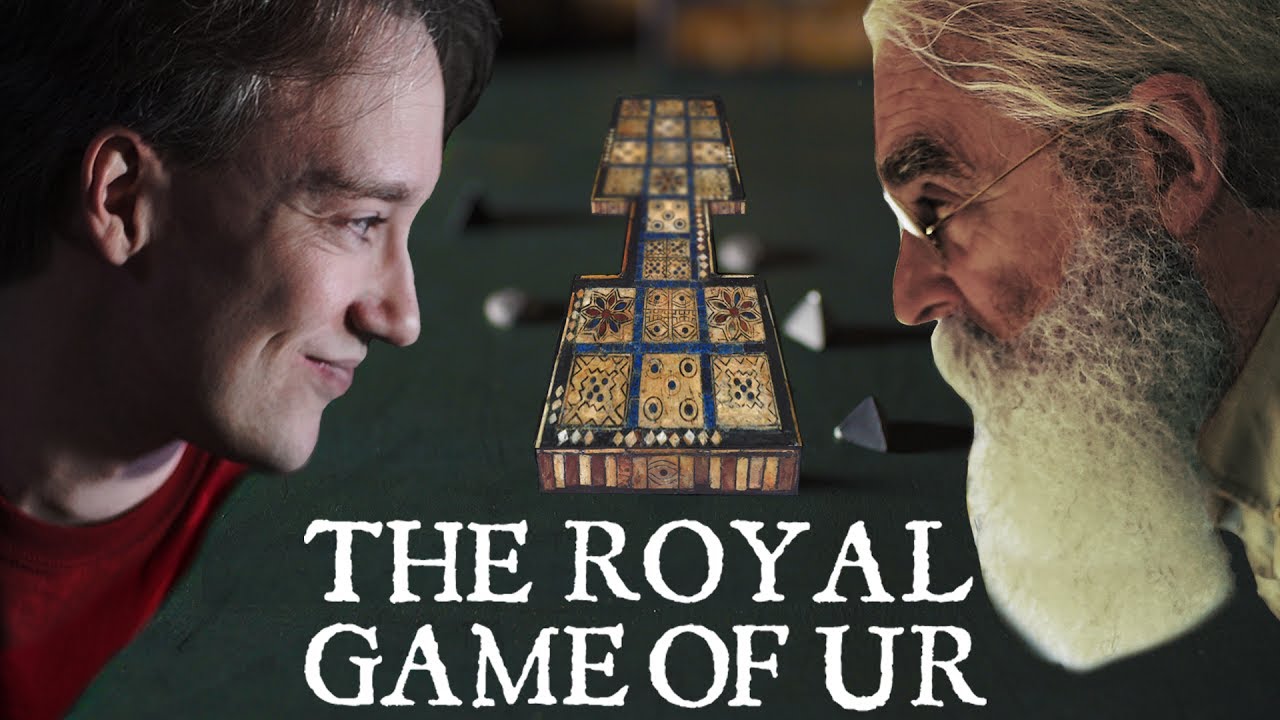
But will a Conan Exiles map ever be this immortal? Is it even theoretically possible to create balance in an unbalanced game through map design? I think the system is too complex, the challenge too great to be taken on with any reasonable amount of effort.
What carries such game in their late phase isn’t PvP, it’s PvE and RP.

On issues on PvP & PvE in same game. (and Dr. Finkel - absolute masterpiece of lecturer!)
But
There are many options (imho) to include Pvp / PvE in game like CE. (if implemented with care and from the beginning at least)
For example foundation tile set that activates PvP on them. No where else. Player can build arenas and Colosseums. Or NPC nobuild/arena where you can fight against inside closed space. Other players could bet ingame items on results? Scheduled events etc. At the moment this could go into Sepermeru. Edit for example “prison” into closed arena etc. For a new map? Endless themes and possibilities.
Events that open some nobuild/npc zones in game to “wars&skirmishes”. Add some narrative, scheduled event or something. For example treasure hunts, raids around some valuable loot etc. where you can loot other players too. But no where else than these restricted areas. Give admin spawn option to trigger these events.
But. Reality check. I do not know could these even work. And in the end this is pipedream. But fun to imagine what could be. So thanks for the topic!
I get where you’re coming from, and I agree that PvP in Conan isn’t living up to its full potential today.
Where I personally struggle with writing PvP off entirely is that I don’t think the problem is PvP itself, but how narrow and unforgiving the viable playstyles are.
There are more ways to play than the game really supports. You can see them if you’ve put in hundreds or thousands of hours, but for newer or curious players, those paths are almost invisible. The barrier isn’t just skill, it’s knowledge, time, and very specific infrastructure.
A player can have fun blowing up a sandstone base a few times, but the moment they run into optimized builds, building metas, or players who’ve perfected combat over years, it can feel pointless rather than challenging.
That’s the gap I’m interested in exploring, not to make PvP safer, but to make more paths visible and viable without requiring extreme time investment up front.
I can actually see some value in that, with a few important caveats.
If there was something like an arena or PvP-focused zone in an NPC city, it would have to be no loot drop, no building, no player-made structures, and no performance-killing foundation stacking. Something closer to a small, controlled instance where people can jump in, fight, respawn nearby, and jump out again.
That kind of space could be useful as a training ground, a place to learn combat, test builds, and meet other PvP-interested players without the fear of losing everything. Especially for players who are curious about PvP but not ready for full world PvP yet. In that sense, it could act as a more accessible alternative to things like Dogs of the Desert, but built into the official experience.
That said, I’d still be very cautious about PvP becoming too separated from the world itself. For me, world PvP, roaming, and risk are still the heart of Conan. So I’d see something like this as a supplement, not a replacement, and definitely not something that drains activity out of the open world.
Interesting idea though, and worth thinking about where it helps onboarding versus where it might undermine the core experience.
I concur.

After reading through a lot of the discussion and feedback so far, I wanted to take a step back and put a few connected ideas on the table in one place.
This isn’t meant as a proposal or a wishlist, but more as a way to explore how an eastern-inspired map could feel different from Exiled Lands and Siptah, not just visually, but in how players move through the world, recover from loss, and find long-term reasons to stay engaged.
None of this is meant to be final. I’m mainly interested in where this resonates, where it falls apart, and what parts people would immediately push back on.
Nomad play & endgame recovery – mobility, risk, and re-engagement
On many PvP servers, people don’t quit because they dislike PvP. They quit because re-engaging after a wipe feels overwhelming, especially for solo players. Recovery is slow, opaque, and heavily favors players who already control bases, thralls, and infrastructure.
That made me think about something Conan Exiles almost supports already, but never fully commits to: nomad gameplay.
Not as an easy mode, and not as a replacement for bases or clans, but as a supported, high-risk, high-mobility playstyle.
From a world and lore perspective, this also fits an eastern-inspired map quite naturally. Cultures like Hyrkanians, Khitai, Yamatai, and Kambujans evoke riders, traders, scouts, mercenaries, and wanderers, not just fortress builders. That opens the door for nomadism as a valid identity in the world, rather than a player workaround.
The core ideas are simple:
• Nomad play is optional, not mandatory
• Bases and clans remain the strongest form of power
• Nomads trade safety and efficiency for mobility and flexibility
Mechanically (very rough, just to illustrate the space), that could look like:
• Small, portable crafting stations meant for survival and maintenance, not mass production
• A nomad-style mount setup that allows much higher inventory capacity to carry gear and mini stations, with clear tradeoffs in handling, combat effectiveness, or survivability
• Temporary camps instead of bases, no walls, no offline protection, fully lootable, high risk
In this setup, the mount effectively becomes your base, and also your biggest liability.
On the endgame side, I’m curious about light recovery paths for solos that don’t trivialize loss. For example, journal- or faction-gated systems at level 60 where players bring a full self-crafted armor set plus resources (gold, silver, rare materials), and have that set imbued with a random Tier 4 armorer effect (Shieldwright, Scoutwright, or Temperwright).
You don’t choose the bonus.
It’s expensive.
It’s RNG.
And it’s never as efficient as owning a real Tier 4 crafter thrall.
The idea isn’t to replace thrall farming or clan infrastructure, but to give nomads and solos a way to re-engage without starting from zero every time.
This isn’t about removing risk. Death, loss, and looting still matter. Abuse cases would obviously need to be discussed, and any of this would need to be server-tunable.
The goal is simply to create more viable ways to stay in the game, encourage roaming PvP, reduce extreme base hiding, and move activity away from a few permanent meta hotspots.
I’m not proposing this as a finished solution. I’m genuinely curious whether this direction resonates at all, or if it clashes too hard with what Conan Exiles should be.
I’d really like to hear from both PvE and PvP players on where this idea breaks, what would immediately be abused, or whether supporting nomad gameplay is even something worth exploring.
Resources & map identity – familiar systems, different behavior
One thing I’d like to explore with an eastern-inspired map is keeping Conan Exiles’ resource ecosystem mostly intact, but changing how and where resources appear – and what the early game visually looks like.
The goal wouldn’t be to overwhelm players with new materials, but to make gathering and building feel more tied to the culture and geography of the map, similar to how Exiled Lands teaches progression through terrain.
Most core resources would still exist:
iron, coal, brimstone, silver, gold, star metal equivalents, plants, hides, etc.
But their distribution, presentation, and early-game role would be different.
Early game materials & building identity
Instead of defaulting to wood + sandstone everywhere, the early game could lean into materials that better fit the setting:
• Bamboo and light stone as primary early-game building materials
Functionally equivalent to wood and sandstone in terms of strength and progression, but visually distinct.
Early shelters would feel fragile, temporary, and culturally grounded instead of immediately turning the map into sandstone grids.
• Sandstone still exists, but is pushed slightly later or tied to specific regions, quarries, or trade hubs.
It becomes familiar but not omnipresent, helping the early map retain a unique look longer.
This keeps progression intact while making the early hours feel fresh and less visually repetitive.
Resource behavior & exploration
Beyond early building materials, resource placement could reinforce movement and discovery:
• Ghost Iron Ore
A Star Metal equivalent that doesn’t fall from the sky, but appears intermittently in mist-covered mountains or ancient battlefields.
It has several possible spawn areas instead of fixed nodes, appearing and disappearing over time.
You know where it can be found, but not exactly when or where, keeping it valuable without creating permanent PvP choke points.
• Trade-route resources
Certain mid-tier materials could appear primarily along caravan paths, abandoned trade posts, or contested steppe regions.
This naturally creates ambushes, roaming PvP, and organic conflict without forcing it through artificial systems.
• Biome-locked plants and alchemy ingredients
Specific lotus types, resins, or ritual materials tied strongly to distinct biomes: bamboo forests, high-altitude monasteries, volcanic ruins, flooded rice terraces.
Map knowledge becomes as important as raw efficiency.
• Endgame materials tied to risk, not inconvenience
High-value resources should come from dangerous regions, elite enemies, or deep dungeons – not long travel for travel’s sake.
The danger comes from exposure and threat, not tedium.
The intent isn’t to reinvent crafting, but to let resource flow, visuals, and progression support exploration, nomad movement, PvE routes, and organic PvP encounters.
I’m curious how others feel about this approach:
Does shifting resource behavior and early building identity do more for map health than adding entirely new systems?
How the world functions – spaces, factions, and player flow
One thing I’d like to explore a bit more is how the map functions moment to moment, not just in terms of biomes, but how players interact with spaces, NPCs, and progression across the world.
The goal isn’t to overload the map with systems, but to let different types of content naturally coexist: PvE, PvP, exploration, training, endgame, and RP.
Monasteries, monks, and controlled conflict
With an eastern-inspired setting, monasteries feel like a natural anchor point for both lore and gameplay.
Some monasteries could be peaceful or neutral, serving as hubs for knowledge, training, and philosophy. Others could be corrupted, abandoned, or overtaken by rogue monks, assassins, or spirit-bound orders.
This opens several interesting possibilities:
• Training-focused spaces
A monastery or enclosed arena-like space where players can enter voluntarily to practice combat.
No loot drop, no building, no player-made structures, controlled performance.
Think of it as a training ground rather than competitive PvP.
There could be a cost to enter (gold, silver, demon blood, etc.) to keep it meaningful, but the reward is experience, learning, and social interaction, not loot.
This could help onboard players into PvP combat without draining activity from the open world.
• Trial-based dungeons
A monastery dungeon built around trials rather than pure combat spam.
Climbing challenges, positioning, environmental hazards, small elite groups, and bosses.
Something closer to “prove yourself” than “farm this endlessly”.
Completing these trials could unlock unique recipes, knowledge, or journal progression, similar in spirit to Silent Legion or Kurak, but thematically tied to discipline, mastery, and endurance.
Endgame zones – The Forbidden Imperial City
The Forbidden Imperial City would function as the map’s equivalent to the Unnamed City.
A ruined Yamatai capital filled with remnants of empire, ghosts, elite enemies, and powerful bosses spread throughout the area.
Fragments of Power (or a renamed equivalent) would be earned here through exploration, combat, and discovery rather than linear dungeon runs.
These fragments could be exchanged for powerful knowledge, endgame recipes, and special unlocks, including things like advanced crafting concepts or nomad-related world recipes.
The idea is that freedom and flexibility come after mastery, not before.
NPC cities and vendors
The map could feature one or more major NPC cities, closer to Sepermeru in function, but culturally distinct.
These cities would feel alive: guards, traders, factions, internal conflicts.
Some vendors would be available early, offering basic trade and survival goods.
Others would unlock only after meaningful endgame progression through journal steps.
This creates a clear sense of advancement: the world doesn’t give you everything at once, but it starts to open up as you prove yourself.
These endgame vendors could support ideas like:
• Converting self-crafted gear into stronger variants through expensive, RNG-based upgrades
• Acting as recovery paths after loss
• Giving solos and nomads a way back into action without replacing traditional thrall-based crafting
Enemy presence and regional identity
Each region would have its own dominant threats and roaming enemies:
• Bamboo forests and jungles
Rogue monks, assassins, jungle predators, bandits, hidden cult cells
• Steppes and trade routes
Nomadic clans, mercenaries, caravan guards, raiders
• Mountain regions
Elite monks, corrupted orders, spirit-bound enemies, harsh wildlife
• Imperial ruins and endgame zones
Ghost soldiers, elite guardians, corrupted officials, ancient constructs
Enemies wouldn’t just exist as mobs, but as expressions of the region’s history and current conflicts.
To be clear, I don’t expect all of this to work together, or even belong in the same map.
The point is simply to explore whether shifting how players live in the world, how they recover from setbacks, and how the map teaches progression could do more for long-term server health than adding another system or mechanic in isolation.
I’m especially interested in hearing where people think this crosses a line:
• What feels like meaningful support versus hand-holding
• What would immediately be abused
• What sounds interesting on paper but would fall apart in practice
PvE, PvP, solo, clan, RP – all perspectives are welcome.
Even if the answer is “this clashes too hard with what Conan Exiles should be”, that’s valuable feedback too.
I know this is a long post - but I wanted to touch up on a few elements to the maps that could spark more conversation and I tried to hit some baseline elements but aswell as progression - these points can be revisited and explored and chewed to pieces if people wish too. Thank for for your time and thank for you you contribution so far.
Sounds like a good inspiration for Conan Exiles II. 
Vendors as a balancing mechanism sound like a good idea. That shouldn’t trivialize PvE, but help PvP players. Legend of Shem has a lot of different traders btw., including some where you can buy and sell basic resources for gold coins.
That might also be another approach to PvP problems: Players could hide stashes of gold somewhere to allow them to rebuild their base if it gets destroyed. Might also be another game loop: finding buried treasures of other players.
PVE-C is more or less like that. You can’t dmg buildings. It’s more focused on player vs player combat.
Sepermeru’s bank with a potion of invulnerability that causes you not to suffer/cause dmg for like 2h or smth. You’d get ganged on otherwise. But players would have a safe stash. It would have a cost though.
I like the sound of that, you’re getting right into the core idea.
To be honest, this would mean a lot for solo PvP players. If you can move your wealth, hide it, and recover without having to anchor everything in a base that gets wiped in the first outnumbered fight, people will engage more. More movement, less fear, more actual player fights – and honestly, probably better solo PvP content in general.
What I find really interesting though is how this could differ between cultures on an eastern-inspired map. When we’re introduced to a new core set of enemies and allies, Khitai, Yamatai, Kambujans, Hyrkanians – how would you imagine gameplay loops that are unique to them?
I’m not razor-sharp on every lore detail myself, but between the books, Age of Conan, and all the lore material out there, it feels like there’s a lot of room to let culture shape risk, wealth, and recovery differently instead of pushing everything into one universal system.
I’m not sure I’d introduce different game play loops, as that creates the need for balancing. Buuuuut let’s give it a try:
- The Kithan faction wants to rebuild a great wall that protects their lands against the dangers of the cursed valley. They give gold for stone, wood and iron reinforcements. ← stolen from Legend of Shem, which has traders for resource to gold and vice versa
- The Hyrkanian warlord wants to have slaves. For every unconscious NPC you drag into their camp, you get gold. ← similar to the sorcerer headhunting event
- The Yamatai expedition wants to recover the family insignia of their comrades who have fallen in the various dangerous areas. ← similar to Valeria’s scout note to gold trade on Isle of Siptah
- The Nemedian faction is looking for sorcerous knowledge, i. e. pages of sorcery. You can trade those in for gold. ← giving a use for pages of sorcery after you upgraded your tome
- A Zamoran mercenary wants to please Zath, so he gives gold for any blood you harvest with the Zath dagger. ← that would be a stupid idea, because you can cheese that with low-level purges.
If faction related game play loops stay relatively low key like that, I’d say balancing isn’t that important. E. g., it might be 17% less time efficient to farm wood for the Kithans than capturing thralls for the Hyrkanians, but people would probably still do both.